Alfresco and patio enclosures
Wind Rating and Outdoor Blinds: What Adelaide Homes Need
6 min read
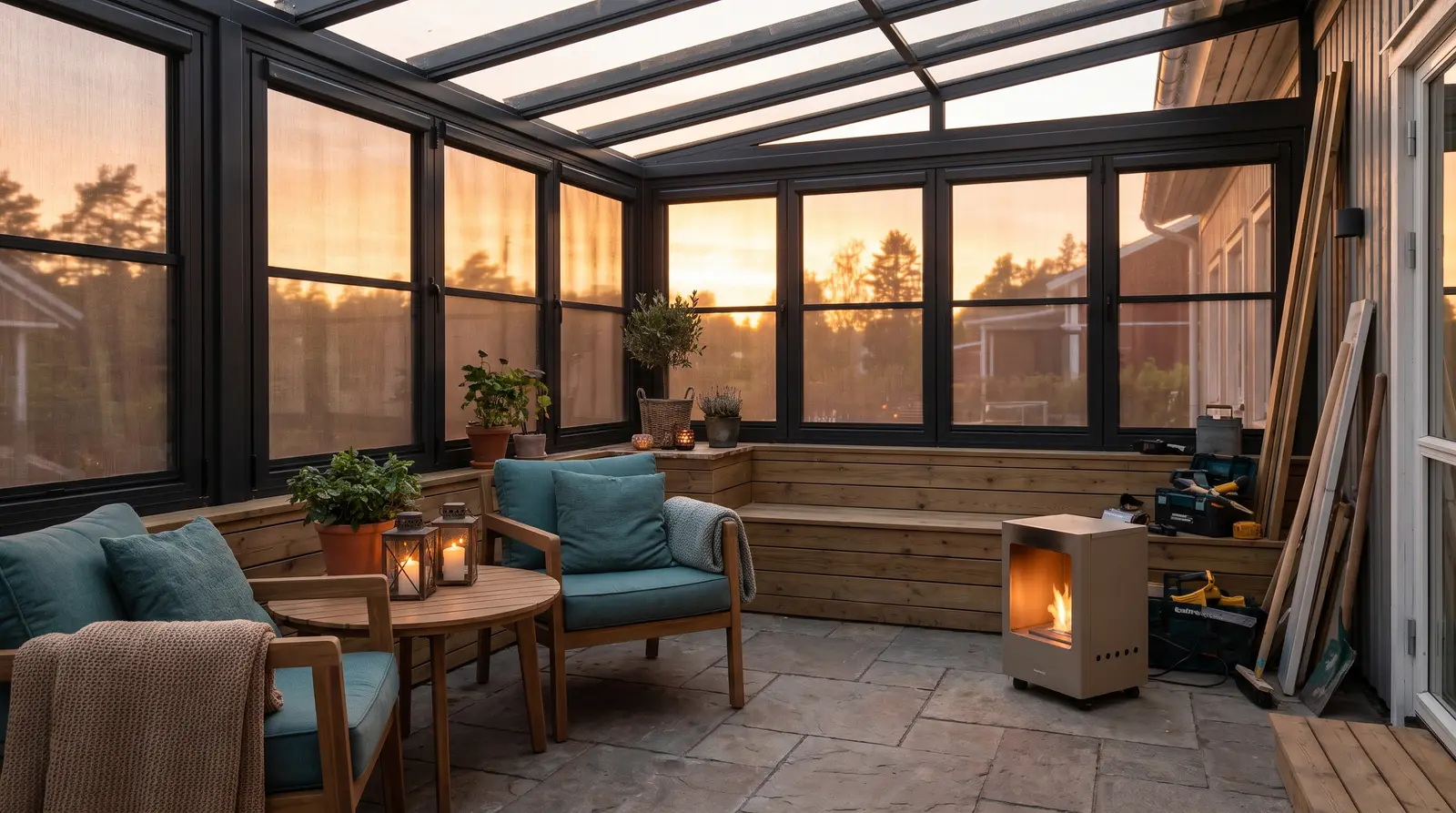
There is no single outdoor blinds wind rating that applies to a product across every job. Wind performance is a function of the system, the span, the fixing and the structure behind it, and it is determined on site by the installer, not printed on a box. A track-guided blind at 3m on a solid post performs very differently from the same product at 5.5m on a rendered balustrade.
Key takeaways
- Manufacturer wind figures are tested maximums under specific conditions, not a guarantee for your opening.
- Span is the dominant variable. Wind load rises with area, so a wide blind carries far more force than a narrow one.
- The fixing and the structure behind it usually fail before the blind does.
- Any installer who quotes a wind rating without measuring your opening and checking what they are fixing into is guessing.
Why a single number does not exist
Manufacturers do publish wind figures, and they are real. A system tested to a given wind speed has been through a rig under controlled conditions with a specific blind size, a specific fixing method and a specific track profile.
Your patio is not that rig.
Change the width and the load changes. Change the fixing substrate from a 90mm steel post to render over lightweight framing and the weakest link moves. Add a wall that funnels wind, or a gap under the roof that lets it get behind the blind, and the pressure distribution changes again. Two identical blinds on 2 Adelaide houses can behave completely differently.
This is why an honest answer sounds less certain than a marketing claim. The installer standing in your space specifies what your opening can take, and that specification is the useful number, not the brochure figure. It is the same reason the alfresco and patio blind service page sends every enquiry to an on-site measure rather than an online configurator.
What actually determines wind performance
Span. The dominant factor. Wind load is pressure times area, so doubling the width of a blind roughly doubles the force on the system. Most track-guided systems run comfortably to around 4m in exposed conditions and 5m to 6m in sheltered ones. Past that, competent installers split the opening into 2 blinds. If one quote runs a 6.5m single span and another splits it, that difference is engineering, not upselling.
Edge retention. Track-guided outdoor blinds capture the blind edge in an aluminium channel down the full height, so load transfers into the track continuously. Strapped cafe blinds hold the blind at 6 to 8 discrete points, and each of those points carries a concentrated share of the load. That is why cafe blinds fatigue in exposed positions and track-guided systems do not, and why turning a patio into an all-weather room starts with the edge retention rather than the fabric.
Fixing and substrate. The strongest track in the world is only as good as what it is screwed to. Timber posts, steel columns and solid masonry are all fine. Render over lightweight framing, unbraced balustrades and old timber with rot at the base are not, and this is where most real-world failures start.
The structure itself. A blind loads the patio frame. A lightweight patio designed only to hold a roof sheet may need bracing before it carries wind-loaded blinds on 3 sides.
Bottom bar mass and locking. A heavy bottom bar sitting in a base track or locked in place resists lift far better than a light bar resting on paving.
Standards Australia publishes AS/NZS 1170.2, the wind actions standard, which is the framework structural engineers and manufacturers work to. It is the reason span limits exist and are not arbitrary.
Adelaide's actual wind conditions
Adelaide is not a cyclonic region, but it produces 3 wind patterns that punish outdoor blinds.
The gulf sea breeze. Builds most summer afternoons on the western beaches, commonly 25km/h to 40km/h, arriving from the south-west. It is not extreme, but it is daily, and cumulative loading is what fatigues fixings and straps. Best outdoor blinds for coastal Adelaide covers the coastal specification in detail.
Winter frontal systems. South-westerly fronts through May to August bring the strongest sustained wind Adelaide sees, often with rain driven horizontally behind it. This is the condition that decides whether an enclosure is a windbreak or a genuine all-weather room.
The gully wind. The evening easterly that funnels down out of the Adelaide Hills after a hot day, an Adelaide-specific phenomenon. Homes in the foothills through Mitcham, Blackwood, Athelstone and Tea Tree Gully feel it most, and it arrives suddenly. The Bureau of Meteorology's Adelaide observations and warnings are the reliable source for what your area actually gets.
Exposure matters as much as the region. A rear courtyard in Norwood surrounded by walls sits in a different wind environment from a west-facing deck at Aldgate on a ridge, and the same blind is a good decision in one and a bad one in the other.
What good practice looks like
An installer specifying wind performance properly will do 4 things on site.
They measure each opening and tell you the widest single blind they will run and where any split falls. They check the fixing substrate physically, including what is behind render. They look at the structure and say whether it needs bracing. They ask about your exposure: what direction the weather comes from, whether the site is elevated or funnelled, and how the space is used.
Then they specify. That specification might be track-guided clear PVC on the 2 weather-facing openings and cafe blinds on the sheltered one, or it might be splitting a wide span. It is a decision about your house, not a product claim.
Ask for it in the quote, in writing, per opening. A quote that says "wind rated" with no numbers, no span breakdown and no fixing method is not telling you anything.
Features worth having on an exposed site
Motorisation with a wind sensor. On an exposed deck, an automatic wind sensor retracts the blind when gusts pass a set threshold, which protects the system when you are not home. Motorising runs $1,600 to $3,200 per opening against $900 to $2,000 manual, and on a genuinely exposed site the sensor alone justifies part of that.
Heavier track profiles. Thicker extruded aluminium costs more and deflects less under load.
Locking bottom bars. A bottom bar that locks into a base track or a floor plate stops lift, which is the mechanism behind most spectacular failures.
Splitting wide openings. Cheaper than the alternative, and it removes the highest-risk element of the job.
Roll them up in serious weather
No outdoor blind is designed to be left down through a severe weather warning. The correct behaviour in a genuine storm is to retract the blinds, because a rolled blind in a headbox presents almost no wind area at all.
Most manufacturer warranties reflect this and exclude damage sustained while a blind was left extended in conditions beyond its specification. Read that clause before you sign, and note that your rights under the ACCC consumer guarantees still sit alongside whatever the warranty says.
The short version
Ask what span, ask what fixing, ask what the installer will guarantee for your specific opening. Then compare quotes on those answers rather than on a headline figure.
We pass your enquiry to a local Adelaide installer who assesses wind exposure on site and specifies per opening. Read how to enclose an alfresco in Adelaide for the full system comparison, see the alfresco and patio blind options, or request a free quote and compare what each installer says about your exposure.