Cafe blinds, clear PVC and track-guided
How Track-Guided Blinds Seal Against Wind and Rain
5 min read
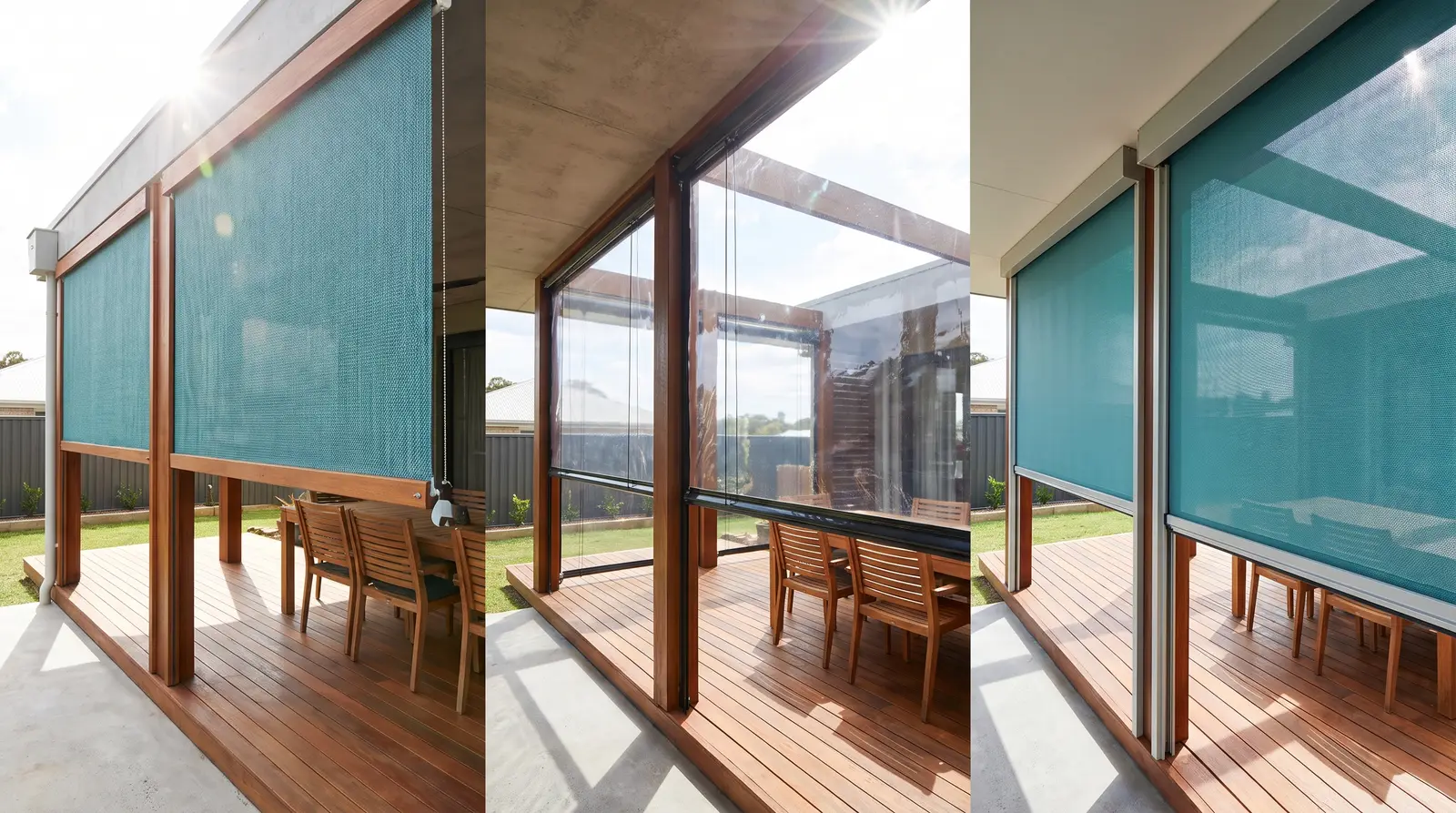
Track-guided outdoor blinds seal because the panel edge is physically captive inside an aluminium side track, so wind cannot lift it and rain cannot blow around it. Understanding track guided wind rain performance means understanding 4 junctions: the 2 side tracks, the head, and the bottom bar. Get all 4 right and the space stays dry.
Key takeaways
- The seal comes from a welded spline trapped in a track channel, not from tension.
- Brush or fin seals at the track slot close the last few millimetres of gap.
- A weighted bottom bar with a rubber seal is what stops water sheeting underneath.
- Most leaks are at the head or the floor junction, not at the sides.
The side tracks: where the real work happens
A continuous polyester or PVC bead, called a spline or keder, is high-frequency welded into both vertical edges of the panel. The aluminium side track has a narrow slot on its face opening into a wider cavity behind. The fabric passes through the slot; the bead cannot, because it is thicker than the slot.
That geometry does 2 things at once. It stops the edge lifting in a gust, and it closes the sightline gap that a strapped blind always leaves. On a cafe blind you live with 10mm to 40mm of open air at each side. On a guided blind the gap is the slot width, typically under 5mm, and better profiles fill even that with a brush pile or a flexible fin seal running the full height.
The other benefit is structural. Wind load passes from the fabric into the track and then into the post or wall. On a strapped blind the same load goes into eyelets and webbing, which is exactly why eyelets tear. A guided panel stays flat in conditions that would balloon a strapped one. The wider system explanation sits in track-guided outdoor blinds explained.
The head: the junction most quotes gloss over
Water that runs down a wall or off a roof will find the top of a blind. Sealing the head needs one of 3 details:
- A headbox or hood enclosing the roller, with the fabric emerging through a sealed lip. Best result, tidiest look, adds cost.
- Head flashing tucked under the fascia, gutter or roof sheet, lapping over the roller housing so water sheds onto the outside face of the blind.
- A recessed reveal, where the roller sits up inside a bulkhead or a rebate in the pergola beam.
If the quote shows a bare roller face-fixed to a beam with nothing above it, expect water to track back along the beam and drip inside the line of the blind. It is a small detail with a large effect on whether the enclosure feels finished.
The bottom bar and the floor
The bottom bar is a weighted aluminium extrusion. Weight is what keeps the panel taut and prevents the base swinging in gusts. Underneath it, a rubber wiper or a brush seal takes up the last few millimetres against the floor.
The problem is that floors are rarely level. A paved alfresco often has 10mm to 20mm of fall for drainage, and decking boards cup over time. A rigid bottom bar sitting on an uneven floor leaves gaps at the high spots and rattles at the low ones. Solutions include a deeper rubber seal, a scribed floor channel, or a small compressible bulb seal. Ask the installer how they intend to handle the floor line before you sign, because it is the number one source of "the blinds leak" complaints in Adelaide.
Also worth planning: where does the water go once it runs down the outside of a 3m clear panel? A sealed enclosure on a flat paved courtyard in Prospect or Unley can pond against the base. A small spoon drain or a redirected downpipe solves it.
What a sealed system does and does not stop
It stops: direct wind, driven rain from the front and sides, dust, pollen, leaf litter, most insects, and a large share of street noise. It holds heat from an outdoor heater in, which is the whole reason a sealed alfresco is usable through an Adelaide winter with evening temperatures around 8C to 12C.
It does not stop: water rising up from a flooded floor, water running back along an unflashed beam, or the pressure differential that pushes a fine mist through any remaining pinhole during a genuine storm. No retractable blind is a window. It is a very good weather screen.
Wind ratings. A track-guided blind fitted to sound structure handles far more than a strapped one, but every system has a rated limit and every warranty has a wind clause. Manufacturers typically expect blinds to be retracted above a stated speed. The Bureau of Meteorology's Adelaide records show gusts above 60km/h in every month of the year, and Hills sites at Stirling, Aldgate and Crafers regularly exceed that in a frontal system. Retract in a warning. It is in your warranty terms for a reason.
Where the seal degrades over time
- Grit in the track. Dust, sand and leaf debris pack into the channel. The blind drags, then judders, then jams. Coastal sites at Glenelg, Henley Beach and West Lakes also get salt crystallising in the slot. Vacuum the tracks and apply dry silicone spray twice a year.
- Brush seal wear. The pile flattens after 6 to 10 years and the light gap reappears. It is a replaceable insert, not a new blind.
- Bottom bar seal perishing. The rubber hardens and cracks under UV. Cheap to replace, and the first thing to check when water starts getting in.
- Structural movement. Timber pergola posts move seasonally. A track that was plumb at installation can pinch 3 years later. Packing and re-plumbing is a straightforward repair.
- Spring fatigue. After 8 to 12 years the balance weakens and the blind creeps down or fails to hold position, which stops it sealing at the height you want.
Typical repair costs run $120 to $600, well short of replacement. Under Australian Consumer Law, goods must be of acceptable quality and durable for a reasonable time, so keep the invoice and the written warranty.
Getting the seal specified correctly
When you compare quotes, ask specifically about: the track profile and whether it carries a brush or fin seal, how the head is flashed or boxed, the bottom bar weight and seal type, how the floor line is handled, and the stated maximum wind speed for operation. Quotes that answer those 5 points are quoting a sealed enclosure. Quotes that only give a price per square metre are quoting a blind.
If you are still choosing between a sealed system and a strapped one, zipped vs strapped outdoor blinds covers the fastening alternatives, and the cafe blind vs track-guided selector resolves the decision in 5 questions.
Start with the track-guided outdoor blinds page to see what the system involves, then get a free quote from local Adelaide installers who will assess your head, floor and post conditions on site.