Cafe blinds, clear PVC and track-guided
Tinted vs Clear PVC Blinds: Which Handles Glare and Heat Better
5 min read
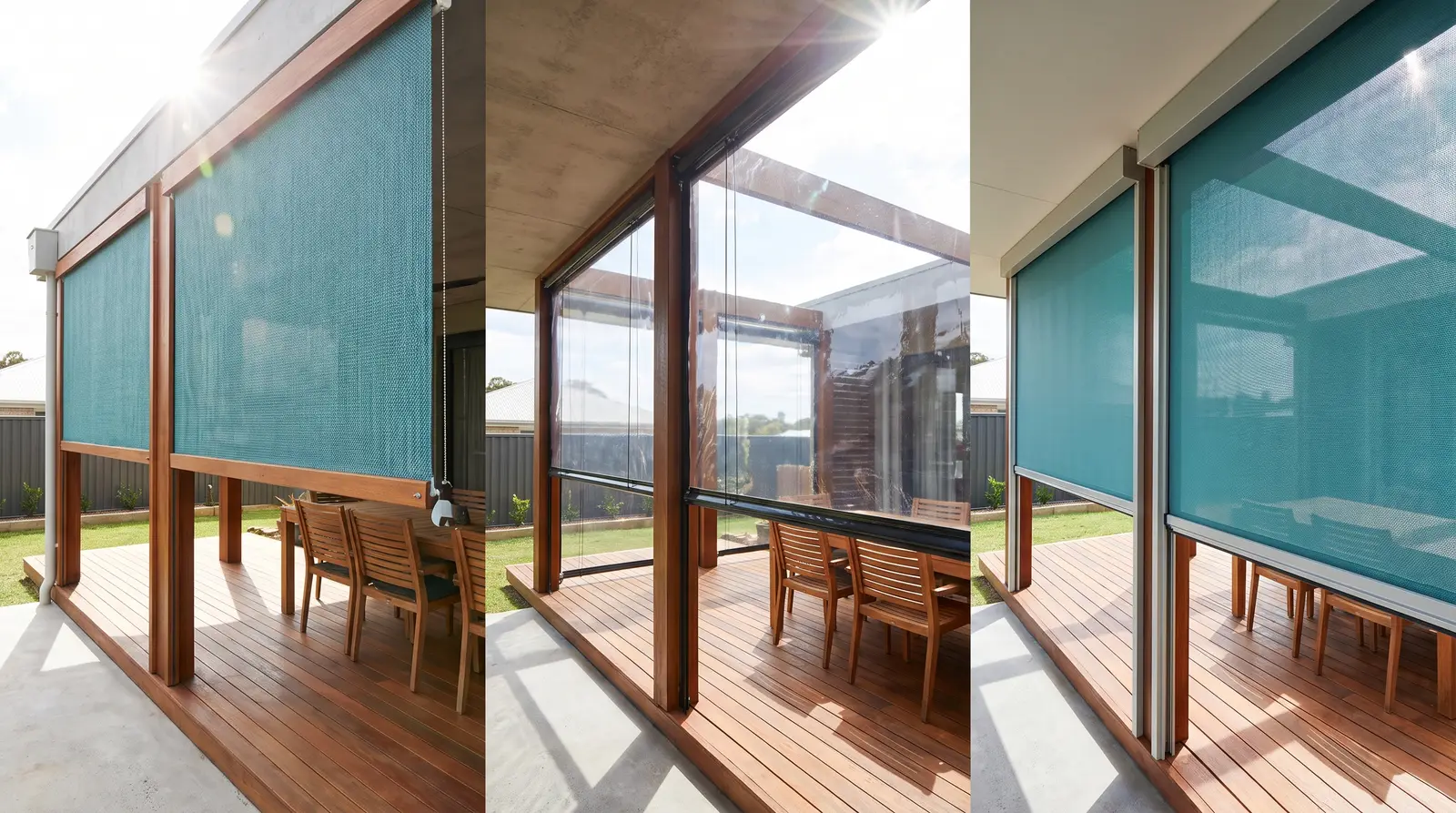
Tinted PVC blinds cut glare and a meaningful share of solar heat while keeping most of the view. Clear PVC gives maximum clarity but passes heat straight through. On a west-facing Adelaide opening, tint wins. On a south or east opening where the view is the point, clear wins.
Key takeaways
- Tint reduces glare and radiant heat. It does not turn a hot alfresco into a cool one on its own.
- Grey tint keeps colours natural. Bronze warms them and reads darker.
- Both tinted and clear PVC cost the same to make, so tint is usually a no-cost specification choice.
- The best result on a western elevation is often a combination panel, not one material.
What tint actually does
Tinted PVC is the same vinyl with pigment added through the sheet. It absorbs a portion of the visible and infrared spectrum instead of transmitting it. The practical effects are 3:
Glare drops immediately. This is the change people notice most. Low afternoon sun through clear vinyl is punishing, and a grey tint takes the edge off in the same way sunglasses do.
Radiant heat drops. Less shortwave radiation reaching people and surfaces means a lower felt temperature, even if air temperature is similar. On the numbers, expect a useful improvement rather than a transformation.
The panel absorbs heat itself. This is the catch. Tinted vinyl gets hotter than clear vinyl because it is absorbing energy, and it then re-radiates some of that into the space. In a fully sealed enclosure with no ventilation, a dark tint can end up hotter than expected.
Grey, bronze and how dark to go
- Light grey (roughly 20% to 30% tint). The safe general choice. Cuts glare, keeps colours neutral, still reads as a view rather than a filter. Suits most Adelaide western and north-western openings.
- Mid grey (40% to 50%). Noticeably darker. Good on unshaded west walls in Marion, Morphett Vale and the outer north where afternoon sun is unbroken. Evening view is dimmer.
- Bronze. Warms everything and pairs well with red brick and timber. Popular on character homes in Unley and Burnside. It makes greens look duller, which matters if you are looking at a garden.
- Heavy smoke. Rarely the right call residentially. Privacy is better served by mesh.
Tint level is a specification, not a price tier. Ordering grey instead of clear normally costs nothing, which makes it one of the cheapest comfort decisions in the whole job.
Choose by elevation, not by preference
This is the part most people get backwards. Pick the material per opening based on where the sun comes from:
| Elevation | Problem | Best specification |
|---|---|---|
| West | Severe low-angle glare and heat from 3pm | Mid grey tint, or mesh with a clear vision strip |
| North | High summer sun, welcome winter sun | Light grey tint, or clear if the eave shades it |
| East | Morning sun, mild | Clear PVC |
| South | Cold, wet, wind, little direct sun | Clear PVC, no tint needed |
A 3-sided Adelaide alfresco very often ends up with clear on the south and east and tinted on the west. That is a better outcome than picking one material for the whole job, and it costs the same.
The combination panel: usually the best answer
On a hard western opening, the strongest specification is not tinted PVC at all. It is a combination panel: acrylic-coated mesh across the top two-thirds to block the sun, welded to a clear or lightly tinted PVC vision strip at seated eye height.
You get shade where the sun is (high), view where your eyes are (low), and the mesh section breathes so the space does not bake. It costs a little more to weld than a single-material panel but on a west-facing patio it outperforms both alternatives. Ask for it by name, because it is not always offered.
Heat is a shading problem, not a blind problem
No blind material fixes an alfresco that has no roof shading. If you are enclosing a space that gets full sun on the roof as well as the sides, tint on the blinds will disappoint. Deal with the overhead first: a solid or insulated roof panel, a shade sail, or an eave extension. Then choose the blind material.
Ventilation matters too. A fully sealed clear PVC enclosure with no airflow behaves like a greenhouse on a 40C day, and Adelaide gets a run of those most summers. The Bureau of Meteorology's Adelaide climate records show February means in the low 30s with regular extremes well above. Leave one opening on mesh, or raise the blinds on the shaded side, or accept that summer use is early morning and evening. The heat and glare side of material choice sits alongside the durability side covered in clear PVC blinds: pros, cons and care.
Does tint change how long the panel lasts?
Slightly, and in tint's favour. Pigment gives some additional UV screening within the sheet, so tinted panels typically hold their condition marginally longer than clear ones of the same gauge and grade. The variable that matters far more is the gauge and whether it is genuine marine-grade UV-stabilised sheet.
Adelaide's UV load is at the harsh end. ARPANSA's UV monitoring records extreme index readings for months of the year. Specify 0.8mm marine grade in either material and expect 7 to 10 years of good condition. Specify 0.5mm budget sheet and expect visible yellowing after 2 summers regardless of tint.
Care is identical for both: warm water, pH-neutral detergent, soft microfibre. Ammonia glass cleaner and metho permanently haze tinted vinyl exactly as they haze clear.
Pricing context
Since tint is not a cost adder, the price depends on gauge and system:
- Cafe blind, clear or tinted PVC, per opening: $450 to $900
- Track-guided clear or tinted PVC blind, per opening: $900 to $2,000
- Motorised track-guided blind, per opening: $1,600 to $3,200
Combination mesh-and-PVC panels typically add $80 to $200 per opening for the extra welding. On a west-facing opening it is the best value line item in the quote.
If you are specifying materials, start on the clear PVC blinds page for the material itself, or the cafe blinds page if the system is strapped. Still weighing strapped against sealed? The selector tool sorts it out, and cafe blinds vs clear PVC vs track-guided compares all 3 in a table.
For elevation-by-elevation advice on your own openings, request a free quote. We pass your enquiry to a local Adelaide installer. Ask them to walk the space and specify each opening on its own orientation.