Care, repairs and maintenance
Fixing a Jammed or Stuck Outdoor Blind Track
6 min read
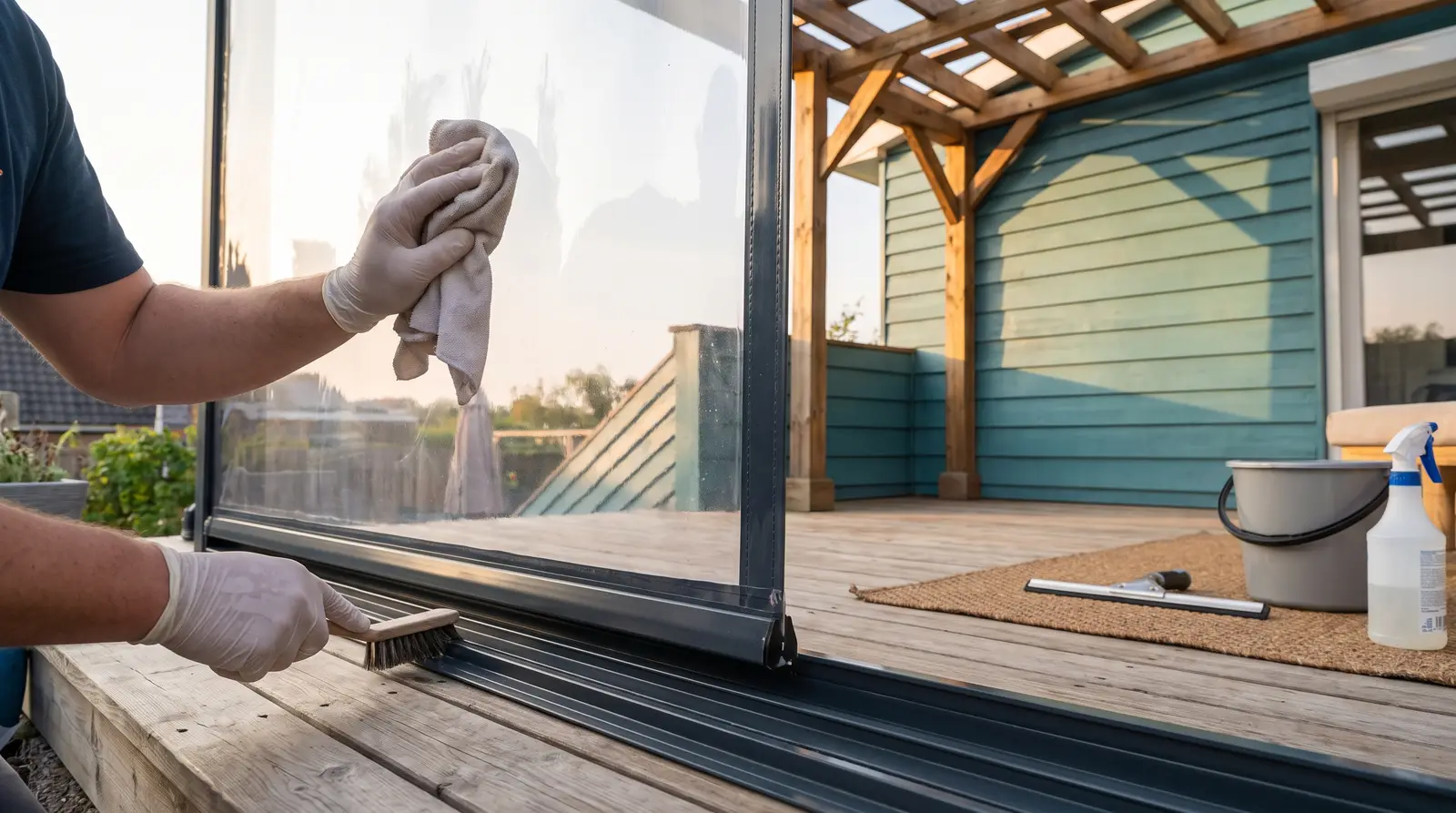
An outdoor blind track repair usually starts with the same cause: grit, leaf litter or a bent guide insert in the side channel, which makes the bottom bar bind and pull out of square. Most jams clear with a flush of the channel and a dry lubricant applied at ground level. If the blind is already racked, the fabric edge bead has pulled out of the channel, or the fault is above your reach, stop and get it assessed, because forcing a jammed blind is how a $180 service becomes a $600 rebuild.
Key takeaways
- The overwhelming cause of jamming in Adelaide is packed dust and grit in the side channels.
- Never force a binding blind: the bottom bar racks, the edge bead tears out and the damage multiplies.
- Safe DIY is limited to what you can reach and operate standing on the ground.
- A professional track service runs $120 to $220; guide insert or channel replacement runs $200 to $450.
Track-guided outdoor blinds run the fabric edge inside a continuous side channel, which is exactly what makes them seal so well against Adelaide wind and rain. It is also what makes them sensitive to anything else getting into that channel.
Why tracks jam in Adelaide specifically
Fine summer dust. Adelaide's dry season delivers weeks of airborne dust, particularly on northerly wind days. It settles into the open mouth of the side channel. The first winter rain turns it into a paste, the paste packs against the guide inserts, and by the next summer it has set hard and become abrasive.
Organic debris in the Hills. Stirling, Aldgate, Crafers and the foothills fringe get gum leaf litter, bark strips and seed capsules into the channel. A single gum nut in the wrong place stops a blind dead.
Salt build-up on the coast. At Glenelg, Henley Beach and West Lakes, salt crystallises inside the channel and inside the bottom bar end caps. The result is a gritty, high-friction surface plus corrosion under the powder coat.
Thermal movement. Adelaide's temperature swing does real work on aluminium. The Bureau of Meteorology's Adelaide climate averages record extremes past 44 degrees in summer against single-figure winter mornings. A dark-coloured aluminium channel on a west-facing Marion or Mitcham opening moves measurably between a 42 degree afternoon and a 6 degree winter morning. If the channel was fixed hard at both ends with no allowance, that movement bows it slightly and creates a pinch point.
Insects and spiders. Nests inside the top box or the channel mouth are more common than most people expect, particularly on blinds left rolled up over winter.
The safe checks you can do yourself
Everything below is ground-level work on a blind you can reach standing up. If any of it requires a ladder, working over a step, or reaching above your head with force, it is a job for a repairer instead. Falls from domestic ladders are one of the more common serious home injuries in Australia, and no outdoor blind is worth it. South Australia's Consumer and Business Services publishes licensing information if you want to check a trade licence before booking anyone.
1. Stop operating the blind. If it is binding, every further pull increases the damage. Leave it where it is.
2. Look into the channel mouth at both sides. Use a torch. You are looking for leaf matter, a wedged gum nut, a spider nest, a deformed guide insert, or a visible packed line of grit and grime.
3. Clear what you can see, gently. A thin plastic ruler, a wooden skewer or a stiff brush will lift debris out. Do not use a screwdriver, a knife or anything metal. Scoring the inside of the channel creates a permanent friction point.
4. Flush the channel with fresh water. A garden hose down the inside of both channels moves out what you cannot see. Let it drain and dry completely.
5. Apply a dry lubricant. A dry silicone or PTFE spray is the correct product for a blind channel. Do not use a wet oil or a general-purpose penetrant. Oil holds dust, which is what caused the problem, and on some blinds it stains the fabric or PVC permanently.
6. Check the bottom bar is square. Look along the bottom bar against the sill or deck line. If one end sits noticeably lower than the other, the blind is racked and needs a technician to reset it. Do not try to twist it back by hand.
7. Test operation gently. With the channel clear and lubricated, a healthy blind runs with light, even effort the whole way. If it still catches at one point, that point has a mechanical fault and needs eyes on it.
When to stop and call a repairer
Get it assessed rather than persisting if any of these apply.
- The fabric or PVC edge bead has pulled out of the side channel. Re-feeding a bead is a workshop-level job and forcing it tears the hem.
- The bottom bar is visibly racked or the blind stops square in one channel and not the other.
- The blind is on a second-storey balcony, above a stairwell, or otherwise not reachable from the ground.
- The top box, roller tube or spring is involved. Spring-loaded tubes hold real stored energy and releasing one without the right tools causes injuries.
- The channel itself is bowed, split, or pulling away from its fixings.
- The blind is motorised and the motor is straining or clicking against the jam. Turn it off at the switch and stop. Diagnosis for motorised faults is covered in motorised outdoor blind not working, and any fault involving mains wiring is licensed electrician work.
What a professional track repair costs in Adelaide
| Job | Adelaide band |
|---|---|
| Track clean, service and re-lubricate | $120 to $220 |
| Guide insert replacement (per side) | $150 to $300 |
| Side channel replacement (per opening) | $200 to $450 |
| Bottom bar reset and re-square | $180 to $320 |
| Edge bead re-feed or hem repair | $250 to $450 |
That sits inside the general $120 to $600 repair band for Adelaide outdoor blind work. The variables are access, parts availability, and whether the system is still in production. Blinds from discontinued systems, which have often been through several generations of componentry, sometimes need substituted inserts, which adds time.
Stopping it happening again
Jamming is close to fully preventable. Twice a year, flush both channels with a hose and re-apply a dry lubricant. Once a quarter, hose the panel down before you roll it up so you are not carrying grit onto the tube (the method is in how to clean clear PVC blinds). Before the first cold snap, clear leaf litter out of the top box area.
Those 3 habits, plus the seasonal jobs in the outdoor blind maintenance checklist, remove most of the reason anyone calls a repairer about a stuck blind at all.
If the blind is already stuck, jammed or racked, our outdoor blind repairs page explains how we pass your enquiry to a local Adelaide repairer who services tracks. Request a free repair quote and get it looked at before the next windy week makes it worse.