Care, repairs and maintenance
How to Clean Clear PVC Blinds Without Ruining Them
6 min read
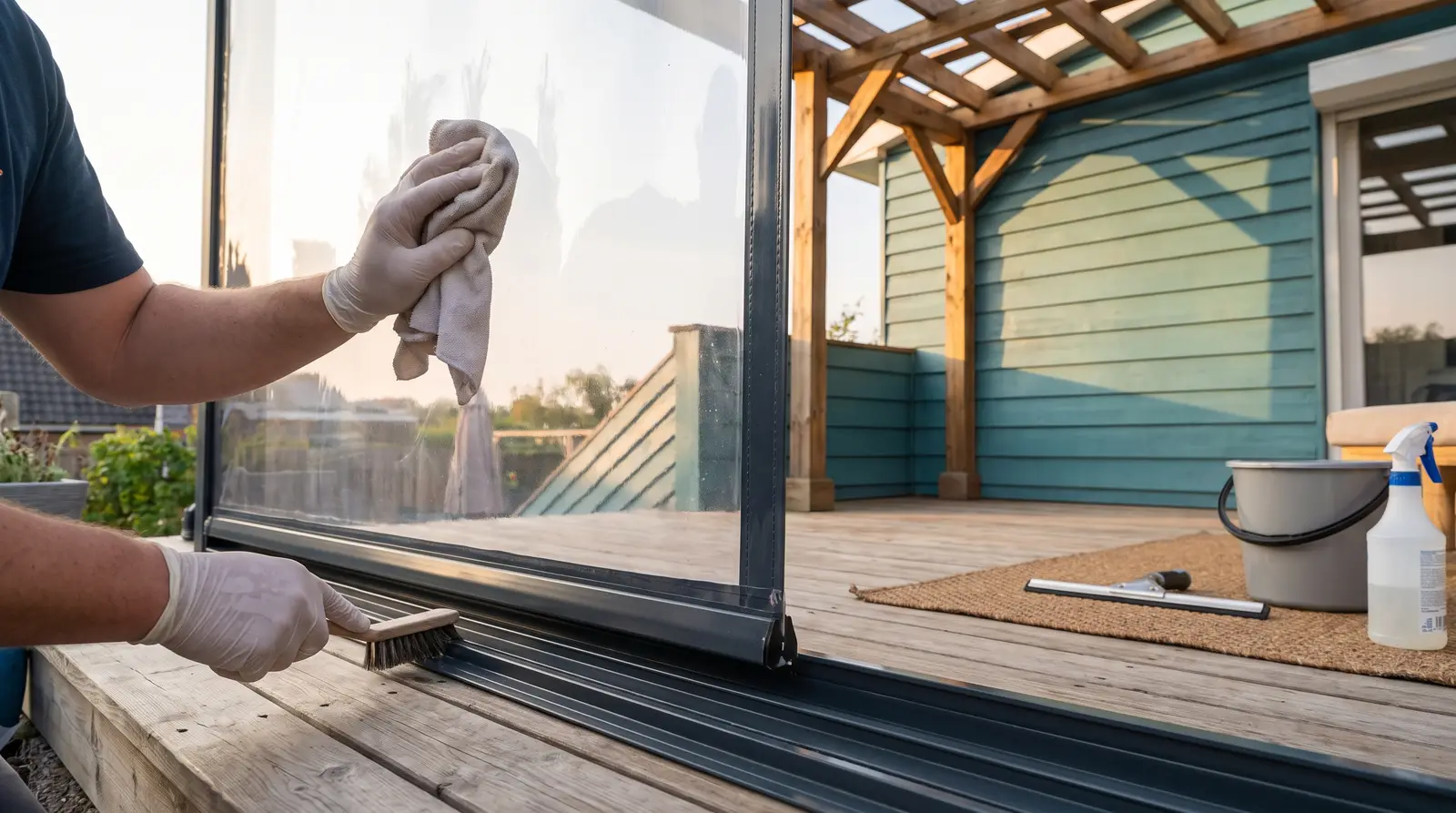
To clean PVC blinds, wash them with warm water and a few drops of pure liquid soap, using a soft microfibre cloth or a clean sponge, then rinse with fresh water and dry with a second dry cloth before rolling the blind up. That is the entire method. Almost every ruined clear PVC panel in Adelaide was destroyed by a cleaning product, not by the weather.
Key takeaways
- Warm water, pure soap, soft cloth, rinse, dry. Nothing stronger, ever.
- Methylated spirits, acetone, bleach, sugar soap, glass cleaner and any solvent-based product will permanently haze or craze the sheet.
- Clean every 3 months inland, every 6 to 8 weeks within a few kilometres of the coast.
- Never roll a PVC blind up wet or dirty: trapped grit scratches the sheet every time it moves.
Clear PVC is a soft, plasticised material, closer to a flexible skin than to glass. It scratches at a fraction of the pressure that would mark a window and it reacts chemically with solvents. Get the routine right and a good-quality panel stays clear for 8 to 12 years in Adelaide. Get it wrong once and the damage does not come out.
The method that works
Do it in the shade, on a mild day, with the blind fully lowered. Hot PVC in direct sun is softer and marks more easily, and cleaning solution dries on the sheet before you can rinse it.
- Hose the panel down first. This is the step people skip and it matters most. Adelaide's fine summer dust sits on the surface as an abrasive layer. Wiping before rinsing grinds it into the sheet and produces the fine scratch haze that people later mistake for permanent clouding.
- Mix warm water with a few drops of pure liquid soap. Pure soap flakes or a plain unperfumed dish liquid. No detergent boosters, no degreaser, no "outdoor cleaner".
- Wash with a soft microfibre cloth or clean sponge, light pressure, in straight passes rather than circles. Do both faces.
- Rinse thoroughly with fresh water. Soap residue left on the sheet attracts dust and dries to a film.
- Dry both faces with a clean, dry microfibre cloth. Air drying leaves mineral spotting from Adelaide's hard water, particularly in the northern and western suburbs.
- Leave the blind down until it is completely dry before rolling it up. The same rule decides whether a panel survives being put away, which is why storing outdoor blinds over winter starts with a full clean and dry.
For the aluminium frame, bottom bar and hardware, the same soapy water works. Along the coast at Henley Beach, Glenelg and West Lakes, rinse the hardware with fresh water even when you are not doing a full clean, because salt deposits draw moisture and start corrosion under the powder coat.
What destroys clear PVC
This list is not cautious advice. Each of these causes irreversible damage.
- Methylated spirits, acetone, turps, thinners and any solvent. They strip plasticiser out of the sheet, which goes hazy immediately and brittle within months.
- Bleach and chlorine products. They yellow PVC and attack the stitching and webbing at the same time.
- Sugar soap and strong alkaline cleaners. They leach the surface and leave a permanent dull film.
- Glass cleaner and anything containing ammonia. Ammonia crazes plasticised PVC. The fine spider-web cracking it produces is the end of the panel.
- Pressure washers. Even at a low setting a pressure washer forces water into the welded seams and stretches the sheet. It also lifts the hem stitching on cafe blinds.
- Scourers, magic-eraser style pads and paper towel. All abrasive enough to scratch. Paper towel in particular is much harder than people assume.
- Insect repellent, sunscreen and citronella oil. These attack PVC on contact. Wipe overspray off immediately.
If a product's label does not explicitly say it is safe on flexible PVC, do not put it on the blind. There is no upside: warm soapy water removes everything that comes off, and nothing removes what does not.
How often, and why Adelaide changes the answer
Cleaning frequency here is driven by dust and salt, not by rain. The Bureau of Meteorology's Adelaide climate averages show long dry stretches through summer, which is when airborne dust does the most damage to a panel.
Inland and foothills addresses (Mitcham, Burnside, Unley, Prospect, Morphett Vale): every 3 months is enough, plus a rinse after any dust-heavy northerly.
Coastal addresses (Glenelg, Henley Beach, West Lakes, Semaphore): every 6 to 8 weeks. Salt aerosol coats the sheet and the hardware continuously, and salt crystals are abrasive as soon as the blind moves.
Adelaide Hills (Stirling, Aldgate, Crafers): every 3 months, with attention to organic debris. Leaf litter, gum sap and bird mess sit acidic on PVC and stain it if they are left through a hot week.
The one non-negotiable is timing around rolling the blind. Every time a dirty panel rolls onto the tube, the grit on the outer face is pressed against the inner face of the wrap above it. That is how a panel accumulates uniform fine scratching across its whole area, and it is the single largest cause of blinds that "went cloudy for no reason". If the panel is dusty and you need it up, hose it first even if you have no time for a proper wash.
Stains, marks and what to do about them
Water spotting: fresh water rinse then dry immediately. Persistent mineral spots respond to a 50/50 warm water and white vinegar wipe, rinsed off within a minute. Do not leave vinegar sitting on the sheet.
Mould in the hem or stitching: common on south-facing Adelaide openings that never get direct sun. Warm soapy water and a soft brush on the stitching, then dry the hem fully. Mould on PVC is usually surface growth feeding on dust, not on the plastic itself.
Sap and adhesive residue: warm soapy water and patience. Do not reach for a solvent.
Fine scratch haze that does not wash off: this is mechanical damage in the surface and it does not come back. Some installers offer a PVC polish, and on light haze it improves clarity for a few months, but it is a cosmetic measure rather than a repair.
Uniform milky clouding across the whole panel with no scratching: this is plasticiser loss and it is terminal for that panel. The full explanation, and how to tell it apart from surface contamination, is in why clear PVC goes cloudy.
Cleaning is the cheapest repair prevention there is
A quarterly clean prevents 2 of the 3 most expensive faults on outdoor blinds, which is worth knowing once you have seen what outdoor blind repairs cost in Adelaide. Grit that never sits on the sheet never scratches it, and grit that gets flushed out of the side channels never packs into the abrasive paste that jams a track and chews the guide inserts (see fixing a jammed outdoor blind track).
Put it on a schedule alongside the rest of the seasonal jobs in the outdoor blind maintenance checklist. South Australia's Consumer and Business Services also notes that following the manufacturer's care instructions matters if you later need to rely on a warranty claim, so keep whatever care sheet came with your blinds.
If a panel is already past cleaning, our outdoor blind repairs page explains how we pass your enquiry to a local Adelaide repairer for a quote on a PVC panel replacement, typically $350 to $600 per opening, rather than a whole new system.