Care, repairs and maintenance
Do Outdoor Blinds Come With a Warranty in Australia?
6 min read
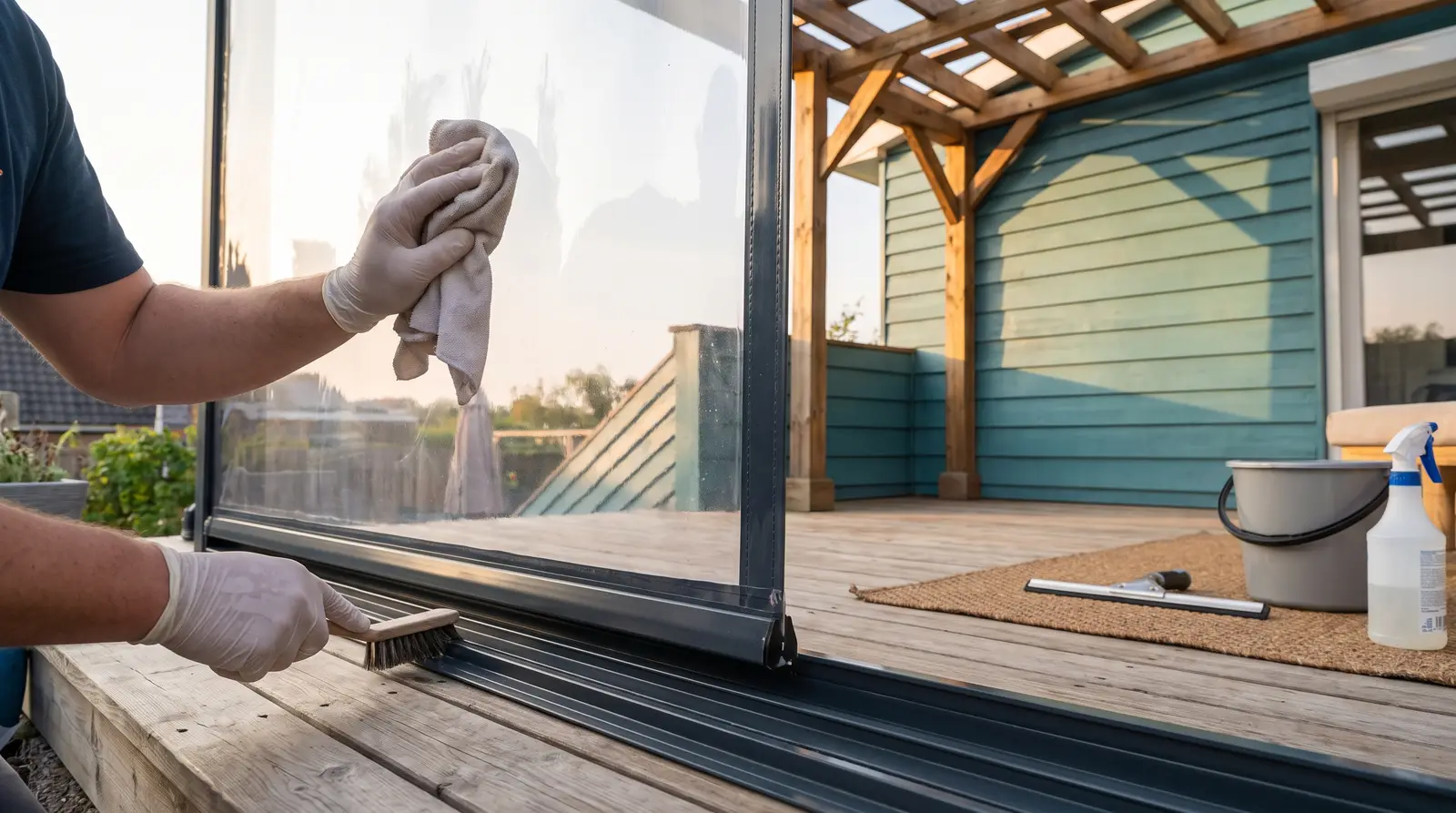
Outdoor blinds sold in Australia come with a manufacturer warranty, typically 1 to 3 years on fabric and hardware and up to 5 or 7 years on some components, and separately with consumer guarantees under the Australian Consumer Law that apply automatically and cannot be excluded. The guarantees are the stronger protection, because they cover a product that fails earlier than a reasonable person would expect regardless of what the warranty card says.
Key takeaways
- A manufacturer warranty is a promise from the seller. Consumer guarantees are a legal right that sits on top of it.
- Typical Australian outdoor blind warranties: 1 to 3 years on fabric, 2 to 5 years on hardware, 3 to 7 years on motors.
- Almost every warranty excludes UV clouding of clear PVC, corrosion in marine environments, and storm damage.
- This is general information, not legal advice. Read your own warranty documentation and check the ACCC.
This article is general information about how warranties on outdoor blinds usually work in Australia. It is not legal advice, and it cannot tell you what your specific warranty says. Read the documentation that came with your blinds, and check the ACCC's consumer guarantees guidance for the authoritative position on your rights.
Two different things, often confused
A manufacturer or supplier warranty is a voluntary commercial promise: this component, for this period, against these defects, subject to these exclusions. Its terms are whatever the document says. It can be generous or close to worthless, and the length of the number on the brochure tells you very little without the exclusions.
Consumer guarantees under the Australian Consumer Law apply automatically to goods and services bought in Australia and cannot be contracted out of. Among other things, goods must be of acceptable quality, which includes being durable for a period a reasonable consumer would expect given the price paid and how the product was described.
The practical consequence matters. If a $1,800 track-guided blind fails structurally at 4 years, the fact that the written warranty expired at 3 does not end the conversation. What a reasonable consumer would expect from an $1,800 product sold as a long-term weather solution is the relevant test, and the remedy sits with the supplier. The ACCC is the national authority on this, and in South Australia Consumer and Business Services handles state-level consumer matters and complaints.
Typical warranty periods on Australian outdoor blinds
Indicative bands across the market. Yours will differ, so verify against your own paperwork.
| Component | Common warranty period |
|---|---|
| Clear PVC and mesh fabric | 1 to 3 years |
| Aluminium hardware, tubes, channels | 2 to 5 years |
| Powder coating and finish | 3 to 7 years |
| Motors and control systems | 3 to 7 years |
| Springs and mechanisms | 2 to 5 years |
| Installation workmanship | 1 to 2 years |
Note that the headline number on advertising is almost always the longest single component figure, usually the powder coat or the motor. The fabric or PVC, which is the part that actually determines when your blind stops looking and working the way it should, generally carries the shortest period on the list.
The exclusions that catch people out
Read this section of your warranty before you read anything else.
UV degradation and clouding of clear PVC. This is the big one. Most warranties explicitly exclude clouding, yellowing and hazing as normal ageing rather than defect, because plasticiser loss is an inherent property of the material. Given the Bureau of Meteorology's UV index data shows extreme summer UV across South Australia, this exclusion does real work here. The mechanism, and what is and is not reversible, is in why clear PVC goes cloudy.
Corrosion in marine environments. Warranties commonly exclude or heavily limit corrosion within a stated distance of the coast, often 1 km or 5 km. That affects Glenelg, Henley Beach, West Lakes, Semaphore, Brighton and Seacliff directly. Ask before you buy whether your address is inside the exclusion zone, and whether specifying marine-grade 316 stainless fixings changes the position.
Storm, wind and extreme weather. Almost universally excluded, on the basis that it is an insurance event rather than a defect. Handling that properly is covered in storm damage to outdoor blinds.
Failure to maintain. Warranties routinely require the product to be cleaned and maintained per the manufacturer's instructions. A blind that jammed because the channels were never flushed is a maintenance failure, not a defect. This is a practical reason to keep dated records of the jobs in the outdoor blind maintenance checklist.
Unauthorised repair or modification. Doing your own work, or engaging a third party, can void a manufacturer warranty on the components involved. Check the terms before you swap anything yourself, and weigh that against what the repair would cost through an Adelaide repairer anyway.
Normal wear on consumables. Straps, buckles, sliders and cords are usually treated as consumables with little or no cover.
Commercial or high-cycle use. Residential warranties frequently do not extend to hospitality venues. Cafes and restaurants should confirm they are on commercial terms.
Making a claim properly
- Find your paperwork. Original invoice, product documentation, warranty card, and any installer correspondence. Without proof of purchase a claim is much harder.
- Photograph the fault clearly, wide and close, before anything is touched or repaired.
- Contact the supplier who sold it to you first, not the manufacturer. Under the Australian Consumer Law the supplier carries the obligation, and being sent up the chain is a common delaying tactic.
- Put it in writing. Email creates the record. State the purchase date, the fault, when it appeared, and the remedy you are seeking.
- Do not accept a verbal "that's not covered". Ask which specific clause they are relying on, in writing, and check it against both your document and the consumer guarantees.
- Escalate if needed. South Australia's Consumer and Business Services handles consumer complaints and can advise on the pathway, and the ACCC publishes guidance on remedies for major and minor failures.
What to ask before you buy
Getting this right at quote stage prevents most disputes.
- What is the warranty period on the fabric or PVC specifically, not the headline number?
- Is UV clouding covered, excluded, or covered only for a shorter period?
- Is my address inside any coastal corrosion exclusion? What fixing grade is being supplied?
- Is installation workmanship warranted separately, and by whom?
- Is the warranty transferable if I sell the house?
- Who do I call in 3 years, and will they still be trading?
That last one is not cynical. A warranty is only ever as good as the business standing behind it, which is why we vet the installers and repairers we refer. Getting the answers in writing on the quote is the point of the exercise.
If your blinds have failed inside a period you think is unreasonable, get an independent assessment of the actual cause before you argue about it. Our outdoor blind repairs page explains how we pass your enquiry to a local Adelaide repairer, so ask for a written diagnosis, and whether the fix is a $120 service or a case for the supplier is often clearer once someone has looked properly. See also repair or replace outdoor blinds for how the numbers usually fall.
Request a free repair assessment and get the fault documented properly before you lodge anything.