Care, repairs and maintenance
Why Clear PVC Goes Cloudy (And What Can Be Done About It)
6 min read
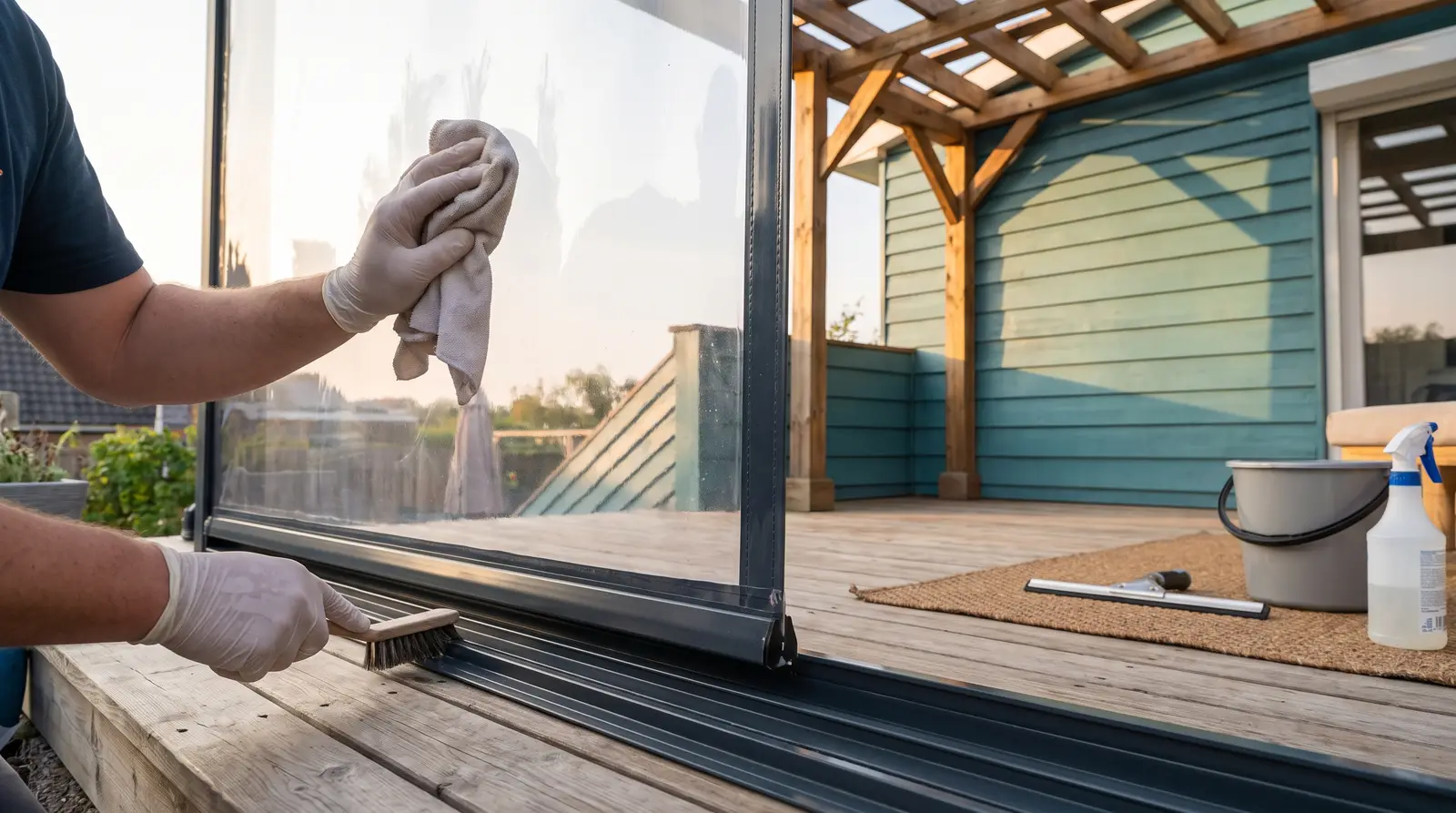
Cloudy PVC blinds have 1 of 4 causes: surface contamination, fine scratch haze, plasticiser loss from UV exposure, or chemical attack from the wrong cleaning product. The first is washable and the second is partly improvable. The last 2 are permanent, because the damage is inside the sheet rather than on it, and no polish, product or restorer on the Australian market reverses them.
Key takeaways
- Wash the panel properly first: a surprising amount of "clouding" is just film and dust.
- Uniform milky haze with no scratching, on a panel over 6 years old, is plasticiser loss and is terminal.
- Fine crazing (spider-web surface cracking) means the sheet is embrittled and near the end of its service life.
- A replacement PVC panel costs $350 to $600 per opening in Adelaide, against $900 to $2,000 for a whole new track-guided blind.
Clear PVC is not a rigid plastic like acrylic. It is polyvinyl chloride made flexible by plasticisers blended into it, and everything about how it ages comes back to what happens to those plasticisers under Adelaide sun.
Cause 1: surface contamination (washable)
The most common and least serious. A film of dust, pollen, salt, soap residue, hard-water mineral spotting or airborne cooking grease builds up on one or both faces and scatters light.
The test: wet a small patch with warm soapy water and wipe it with a soft cloth. If the clarity comes back while it is wet and stays back once dry, it is contamination. Wash the whole panel using the method in how to clean clear PVC blinds, which is warm water, pure soap, soft microfibre, fresh rinse, dry with a second cloth.
Two Adelaide-specific contributors here. Hard water in the northern and western suburbs leaves mineral spotting if a panel air-dries, and coastal addresses at Henley Beach, Glenelg and West Lakes accumulate salt film continuously, which is hygroscopic and holds a dull dampness on the sheet.
Cause 2: fine scratch haze (partly improvable)
Thousands of shallow scratches across the surface, each individually invisible, reading collectively as a milky sheen. Hold a torch at a low angle across the panel at night: scratch haze throws visible fine lines, plasticiser loss does not.
The overwhelming cause is rolling a dusty panel. Every time a dirty blind rolls up, the grit on the outer face is pressed against the face of the wrap above it and dragged. Do that twice a week for 3 summers of Adelaide dust and the whole panel is uniformly scuffed. The second cause is wiping a dry, dusty panel instead of hosing it first.
A PVC polish, applied by hand or by an installer, fills and levels light scratching and does noticeably improve clarity. It is cosmetic, it lasts a few months, and it does nothing for deep scoring. Treat it as maintenance, not repair.
Cause 3: plasticiser loss (permanent)
This is the real ageing mechanism and the one people most want a solution for. Plasticiser molecules are blended into the PVC, not chemically bonded to it. Sustained heat and UV drive them out of the sheet: they migrate to the surface, evaporate or wash away, and the sheet left behind is progressively harder, hazier and more brittle.
The signature is unmistakable once you know it: a uniform milky whiteness across the entire panel, no directional scratching, and a sheet that feels stiffer and sounds crisper when flexed than it did when new. Yellowing often accompanies it. Later stages show crazing, a fine spider-web of surface cracks, which means the panel is now structurally near the end and will split at a fold or a hem under load.
Adelaide accelerates this harder than most Australian capitals. The Bureau of Meteorology's UV index information shows extreme summer UV across South Australia, and Adelaide climate averages record January mean maximums near 29 degrees with extremes past 44. A west-facing opening at Marion or Mitcham that takes 5 hours of direct afternoon sun in January is on a fundamentally shorter clock than a south-facing Norwood courtyard, and the difference is years, not months.
Realistic Adelaide service life for clear PVC before noticeable clouding:
| Aspect and grade | Years to visible clouding |
|---|---|
| South or east facing, 0.8 mm marine-grade PVC | 10 to 12 |
| Sheltered west facing, 0.8 mm | 7 to 9 |
| Fully exposed west or north facing, 0.8 mm | 5 to 7 |
| Thin or budget PVC (0.5 mm), any aspect | 3 to 5 |
Nothing reverses plasticiser loss. Products marketed as PVC restorers are silicone or oil-based surface fills, and they improve the look for weeks while doing nothing to the sheet chemistry.
Cause 4: chemical attack (permanent)
The avoidable one. Ammonia-based glass cleaner, methylated spirits, acetone, bleach, sugar soap, turps and solvent-based products all attack plasticised PVC directly. Ammonia crazes it, solvents strip plasticiser out in a single application, bleach yellows it and attacks the stitching at the same time.
Chemical damage usually shows as patchy or streaky haze rather than uniform, often following the pattern of the wipe. If clouding appeared suddenly after a clean, this is what happened, and it does not come out.
Insect repellent, sunscreen and citronella oil belong on the same list. Overspray onto a clear panel needs washing off immediately with soapy water.
What to do about a clouded panel
Wash it properly first. Do a full correct clean before spending money. Contamination and light haze together account for a substantial share of complaints.
Try a PVC polish on light haze. Cheap, low risk, buys a season or 2 of better clarity.
Replace the panel, not the blind, when it is plasticiser loss. This is the point people get talked past. A PVC panel replacement in an existing frame, tube and hardware runs $350 to $600 per opening in Adelaide, which sits at the upper end of how Adelaide repairers price outdoor blind work. A whole new track-guided clear PVC blind runs $900 to $2,000 per opening. If the tube, springs, channels and bottom bar are sound, replacing the panel alone is the correct economic call, and any repairer who refuses to quote it that way is quoting a sale rather than a repair.
Replace the blind when the hardware has aged with the panel. If the springs are tired, the channels are corroded and the panel is clouded, you are replacing everything piecemeal at a worse price than a new unit. The full framework is in repair or replace outdoor blinds.
Buying the next panel so it lasts longer
Specify 0.8 mm marine-grade PVC rather than the thinner 0.5 mm sheet that appears in budget quotes. Ask directly whether the sheet carries a UV stabilisation package, and ask what the manufacturer's stated warranty is on clarity specifically, since many warranties cover splitting but not clouding. Your rights are broader than the paperwork suggests: see outdoor blinds warranty in Australia.
Then protect it. Rolling the blind up over the harshest part of summer, keeping it clean, and washing before rolling adds years, and those habits plus the rest of the routine are set out in extending the life of your outdoor blinds.
To have a clouded panel assessed and quoted properly, our outdoor blind repairs page explains how we pass your enquiry to a local Adelaide repairer. Ask them to price the panel on its own before pricing a replacement system.