Care, repairs and maintenance
Outdoor Blind Repairs in Adelaide: What Can Actually Be Fixed
7 min read
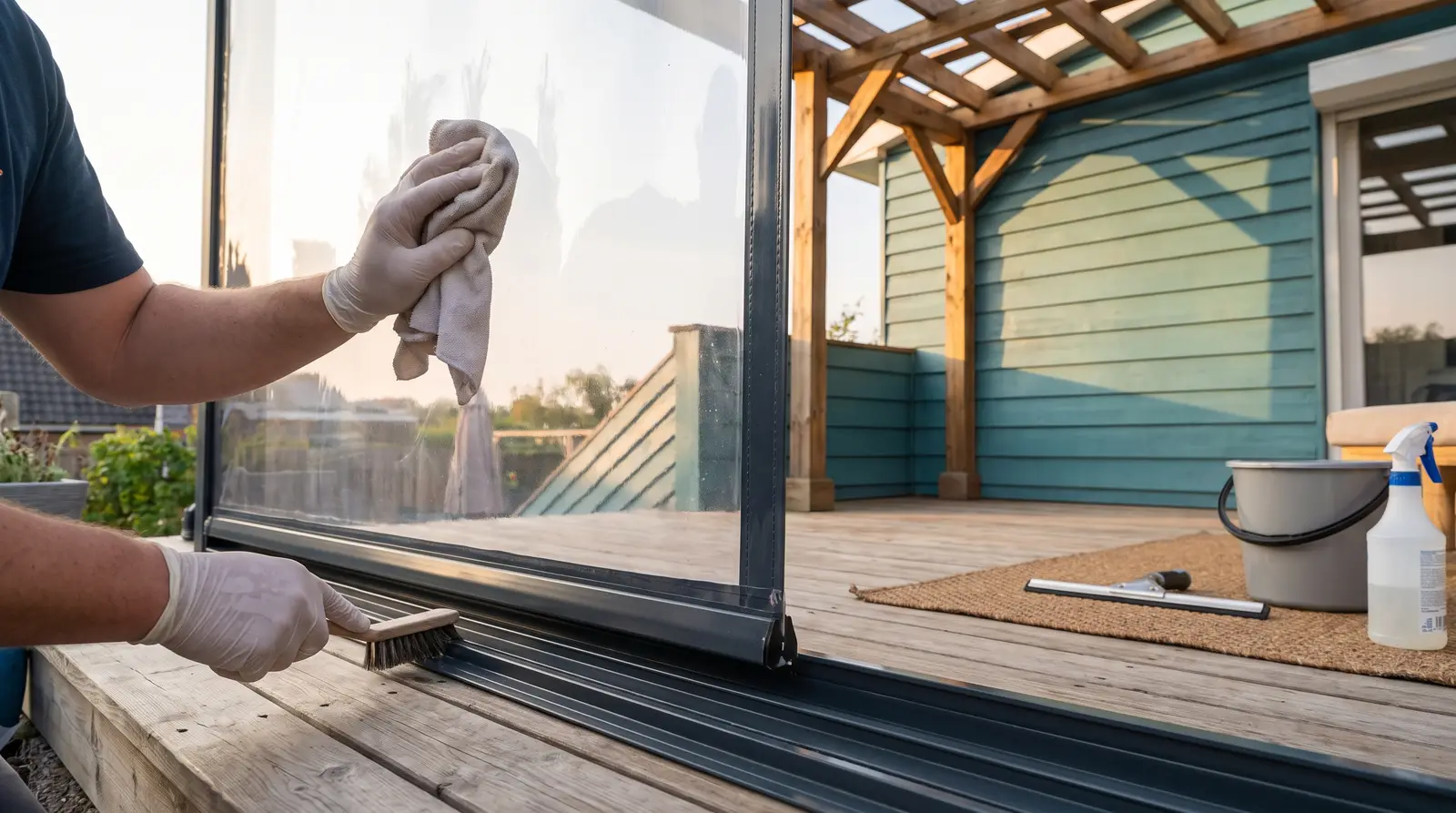
Most outdoor blind repairs in Adelaide cost between $120 and $600, and the great majority of faults are genuinely repairable: jammed tracks, snapped straps, failed buckles, torn PVC panels, worn spring tension and dead motors are all component-level fixes. The blinds that are not worth repairing are the ones where the fabric or PVC itself has failed across the whole panel, because at that point you are paying for a new blind with old hardware attached.
Key takeaways
- Typical Adelaide repair band is $120 to $600 depending on whether it is hardware, a panel, or a motor.
- Grit in tracks and UV embrittlement of plastic components cause more failures here than anything else.
- Coastal addresses fail at the fixings first, inland and Hills addresses fail at the fabric and strapping first.
- Replace when the PVC or mesh has failed across the panel, when 2 or more major components are gone at once, or when the blind is past 10 years and out of parts.
This guide covers what actually breaks, what each fix costs, and how to tell a repair job from a replacement job before anyone quotes you. If you already know you need someone on site, our outdoor blind repairs page explains how we pass your enquiry to a local Adelaide repairer.
The 6 faults Adelaide repairers see most
Grit and debris in the side tracks. This is the single most common call-out. Adelaide's dry summers drive fine dust into channel tracks, and once it packs down with a bit of moisture it becomes an abrasive paste. The blind gets progressively heavier to operate, then binds, then the bottom bar racks out of square and jams. Caught early it is a clean-and-lubricate job. Left for a season it chews the guide inserts and the fabric edge bead. Full diagnosis is in fixing a jammed outdoor blind track.
Strap, buckle and eyelet fatigue. Strapped cafe blinds hold tension at fixed points, so every gust loads those points. Buckles crack, webbing frays at the eyelet, and the eyelet itself tears out of the PVC hem. This is cheap and fast to fix if you do it before the hem tears. See replacing outdoor blind straps and zips.
PVC clouding, yellowing and crazing. Clear PVC is a plasticised material. Under sustained Adelaide UV the plasticiser migrates out, the sheet goes hazy, then brittle, then develops fine surface crazing that never polishes back. Clouding from surface contamination is fixable. Clouding from plasticiser loss is not, and no product on the shelf reverses it. The distinction is explained in why clear PVC goes cloudy.
Spring tension loss. Spring-balanced blinds rely on a torsion spring inside the roller tube. After several thousand cycles the spring loses preload and the blind either creeps down on its own or refuses to retract fully. Re-tensioning is a standard service item. A failed spring means a tube service.
Motor and control faults. Motorised blinds fail at the remote, the limits or the motor itself, in that order of likelihood. Most are user-resolvable before a technician is needed, which is covered in motorised outdoor blind not working.
Corrosion at the fixings. Along the coast at Glenelg, Henley Beach, West Lakes and Semaphore, salt aerosol attacks brackets, screws and pop rivets. Untreated or 304-grade stainless fixings pit and weep rust stains within 3 to 5 years there. Marine-grade 316 stainless is the correct specification on any address within a few kilometres of the water.
What repairs cost in Adelaide
These are the bands local repairers quote on standard residential work, including a call-out.
| Repair | Adelaide band |
|---|---|
| Track clean, service and re-lubricate | $120 to $220 |
| Strap, buckle and eyelet replacement (per blind) | $130 to $280 |
| Spring re-tension or roller tube service | $180 to $350 |
| Guide insert or side channel replacement | $200 to $450 |
| PVC panel replacement (single opening) | $350 to $600 |
| Motor replacement or re-limiting | $300 to $600 |
There are 2 things that move a job to the top of its band. The first is access: a second-storey balcony in Glenelg or a high verandah in the Hills needs a platform, and that adds time before anyone touches the blind. The second is parts availability. A blind from a system still in production is a same-visit fix. A blind from a discontinued system often needs a fabricated or substituted part, and some older bottom bars and end caps simply cannot be sourced any more.
When repair genuinely beats replacement
Repair is the correct call when the fault is confined to hardware and the fabric or PVC still has life in it. A $200 track service on an otherwise sound $1,400 track-guided blind is obvious value. So is a $250 strap replacement on a cafe blind whose PVC is still clear and supple.
Repair also wins when only 1 opening in a run has failed. Matching a new single blind to an existing run is difficult because fabric batches and PVC gauges shift over time, and a mismatched panel is visible from across the yard. Fixing the failed one keeps the run uniform.
Replacement wins when the failure is in the panel material itself across its full area, when the blind is beyond 10 years and parts have been discontinued, or when you find yourself facing 2 or more major component failures at once. At that point the repair cost approaches the cost of a new blind and you are still left with aged hardware. The full decision framework, with the numbers, is in repair or replace outdoor blinds.
Why Adelaide is harder on outdoor blinds than most of Australia
The combination is unusual. Long stretches of extreme UV, very low summer humidity, then a wet and windy winter, all in the same year on the same components.
The Bureau of Meteorology's Adelaide climate averages show January mean maximums near 29 degrees with extremes well past 44. Sustained heat at that level accelerates plasticiser migration in clear PVC and embrittles the polypropylene and nylon components (guide inserts, end caps, buckle bodies) that manufacturers use because they are cheap and light. Those parts do not usually break in summer. They break in the first cold, windy week of winter, when a brittle part meets a shock load.
Add the geography. A west-facing opening at Marion takes hours of direct afternoon sun that a south-facing Norwood courtyard never sees. Stirling and Aldgate catch gusty, direction-shifting valley wind that works strapping points loose. West Lakes and Henley Beach get salt on every surface. That is 3 houses, 3 completely different failure modes, all inside 30 km.
What genuinely cannot be repaired
There are 3 failures that end a blind rather than start a repair.
A panel that has failed across its whole area. Uniform clouding from plasticiser loss, widespread crazing, or mesh that tears under thumb pressure. The sheet is the expensive component and there is no partial fix for material that has aged everywhere at once.
Structural corrosion through the mounting hardware. Once brackets or fixings have corroded through, the blind is a load hanging on compromised steel. Along the coast this is what ends blinds installed with 304 stainless instead of marine-grade 316.
Discontinued componentry with no substitute. Bottom bar profiles, end caps and guide inserts change between system generations. A repairer can often substitute, but not always, and a fabricated part on a 12 year old blind is money spent on borrowed time.
Everything else on an outdoor blind is a component, and components are replaceable. That includes torn PVC panels, which replace into the existing tube and channels for $350 to $600 rather than requiring a new $900 to $2,000 system. Repairers who skip straight past that option are quoting a sale.
Getting a repair quoted properly
Ask 4 questions before you commit to anyone.
- Will they repair blinds they did not supply? Many retailers will not, which is exactly why repair-capable trades are harder to find than sellers.
- Can they source parts for your system, or will they substitute? Substituted guide inserts and bottom bars often work, but you should know in advance.
- Is the call-out fee credited against the repair? Most Adelaide repairers credit it. Some do not.
- What is the warranty on the repair itself, separate from the original product warranty? Your rights under Australian Consumer Law are outlined in outdoor blinds warranty in Australia, and the ACCC consumer guarantees guidance is the authoritative reference.
Most faults on outdoor blinds are prevented rather than fixed. A twice-yearly track flush and a strap check takes 20 minutes and removes the two most common failure paths entirely, and the outdoor blind maintenance checklist sets out exactly what to do and when.
When you want it assessed on site, request a free repair quote and we pass your enquiry to a local Adelaide repairer. Ask them straight whether the blind is worth fixing.