Care, repairs and maintenance
Motorised Outdoor Blind Not Working: Common Causes and Safe Checks
6 min read
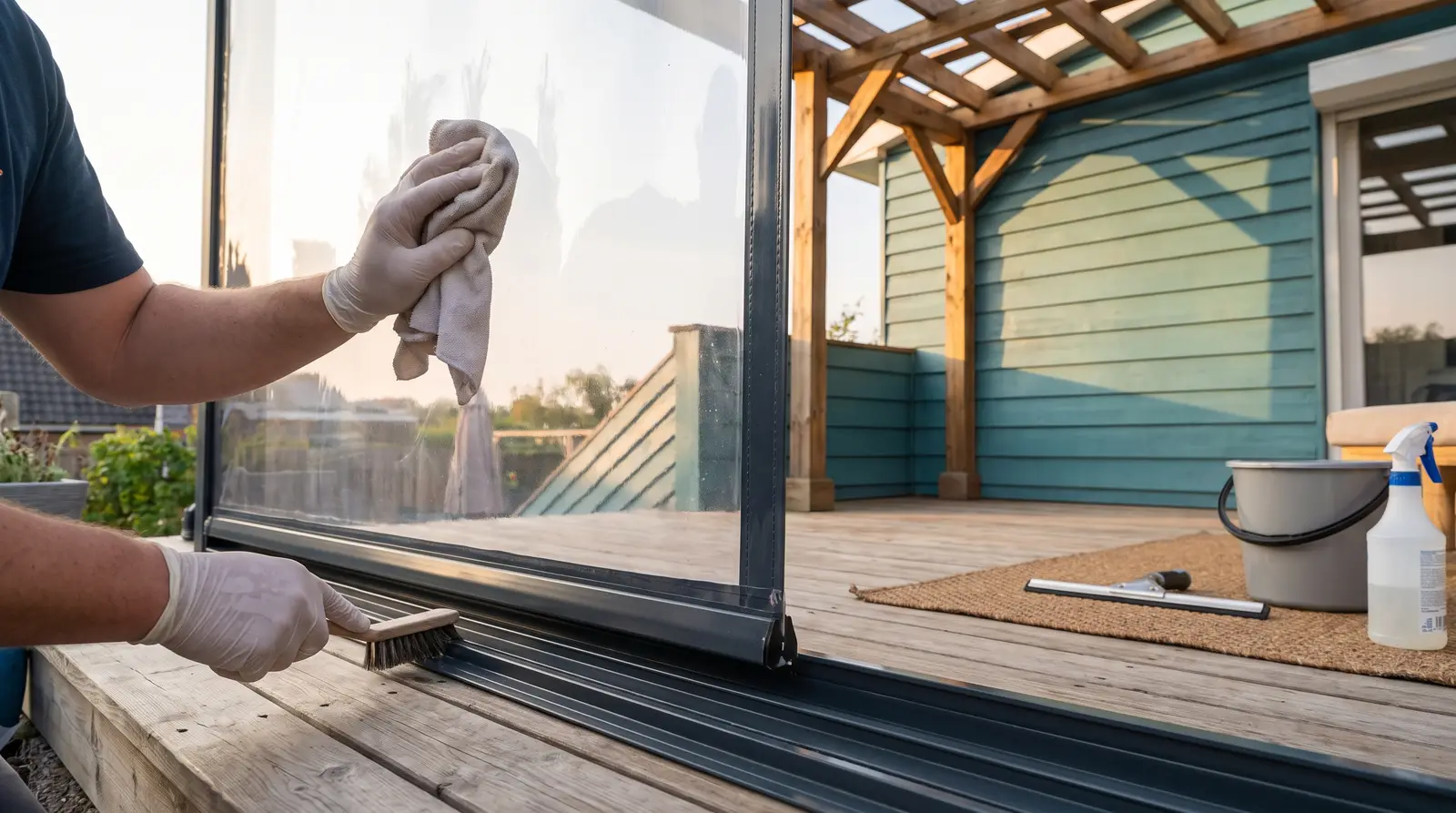
When a motorised blind is not working, the cause is almost always the remote battery, a lost pairing, drifted travel limits, a physical obstruction in the track, or the motor's thermal cut-out after repeated use. These are all safe to check yourself in a few minutes. Anything involving mains wiring, a hard-wired switch, a power point or a circuit is licensed electrician work and must not be attempted.
Key takeaways
- Work through the safe checks in order: power, remote, obstruction, limits, thermal cut-out.
- A motor that has run several cycles in a row often stops on its own thermal protection and resets after 15 to 20 minutes.
- Never force a motorised blind that is jammed, and never open a motor, control box or wiring enclosure.
- Electrical work in Australia must be carried out by a licensed electrician. Motor replacement or re-limiting runs $300 to $600 in Adelaide.
Motorised outdoor blinds fail in a predictable order, and the cheap causes are far more common than the expensive ones. Work through them properly before assuming the motor is dead, because a large share of call-outs end with a battery.
Safety first, and where the line sits
Two lines you do not cross.
Mains wiring. Do not open, test, modify, repair or reconnect anything on the mains side: power points, isolating switches, hard-wired controllers, junction boxes, transformers or motor leads. In Australia this work is legally restricted to licensed electricians, and outdoor installations sit in a wet, salt-exposed, UV-degraded environment where insulation fails earlier than it does indoors. South Australia's Consumer and Business Services publishes licensing requirements for electrical work if you want to verify a contractor's licence before you book them.
Stored energy and jammed mechanisms. Do not release a spring-loaded tube, do not open a motor housing, and do not force a blind that has bound in its track. A motor straining against an obstruction will keep applying torque until something gives, and what gives is usually the bottom bar, the fabric hem or the tube.
If the blind is jammed, isolate it at the switch or unplug it, then stop.
Check 1: is it actually getting power
- Is the power point switched on, and has anything else on that circuit tripped?
- Check the switchboard for a tripped circuit breaker or RCD. Resetting a breaker once is reasonable. If it trips again immediately, leave it off and call a licensed electrician, because a repeat trip means a genuine fault.
- If the blind runs from a plug-in transformer, confirm the plug is seated and the indicator light (if there is one) is on.
- Some systems have an isolating switch mounted separately from the wall controller. On a lot of Adelaide installs it is tucked inside the alfresco near the top box and easy to bump.
Do not go beyond looking. No testing, no opening, no rewiring.
Check 2: the remote
This is the most common single cause and it is worth being systematic.
- Replace the battery even if the remote's LED still lights. Radio transmitters lose range on a weak battery long before the LED dies, which produces the classic symptom of a remote that works standing right under the blind but not from the kitchen.
- Check the channel. Multi-channel remotes select which blind or group they are addressing. A bumped channel button makes a working blind look dead.
- Check for a lock or a hold. Some handsets have a keypad lock or a group hold that stops individual operation.
- Test range. If it works at 1 metre and not at 5, that is signal, not motor.
- Check for interference. A new wifi mesh node, a Bluetooth speaker or an LED driver installed near the receiver can swamp the frequency. Try operating with recently added electronics switched off.
- Re-pair the remote using your system's documented procedure. Pairing can drop after a power interruption, which in Adelaide often means after a summer storm outage. If you no longer have the manual, the manufacturer publishes it, and pairing sequences are system-specific enough that guessing usually makes it worse.
If you have a wall switch as well as a remote, test both. Wall works and remote does not means it is the remote or the receiver. Neither works means it is power, limits or the motor.
Check 3: obstruction
Look before you press the button again.
- Debris in the side channels, which is the leading mechanical cause in Adelaide (fine summer dust, gum litter in the Hills, salt crystallisation on the coast). Full diagnosis in fixing a jammed outdoor blind track.
- Something sitting on or against the bottom bar: outdoor furniture, a pot plant, a folded umbrella.
- The bottom bar racked out of square in one channel.
- A spider or insect nest in the top box or channel mouth, common on blinds that sat unused over winter.
Clear only what you can reach standing on the ground with a soft tool. Never a screwdriver or anything metal inside a channel.
Check 4: travel limits and thermal cut-out
Travel limits. Motorised blinds store an upper and a lower stop position. Symptoms of drifted limits are distinctive: the blind stops short of the sill, stops early on the way up, runs then immediately reverses, or refuses to move in 1 direction only.
Limits drift after a power interruption, after an obstruction event, or as the fabric relaxes and the effective travel changes over the first year or 2. Most systems allow limits to be reset from the handset or a small button on the motor head, and the sequence is documented per system. If you have the manual, resetting limits is a legitimate homeowner task because it involves no wiring. If you do not have the manual, a repairer will do it as part of a service visit rather than you guessing at button combinations that may factory-reset the motor.
Thermal cut-out. Tubular motors on residential blinds are rated for intermittent duty, typically around 4 to 6 minutes of continuous running. Run a blind up and down repeatedly (which people do while trying to diagnose the fault) and the motor's internal thermal protection opens and stops it dead.
The symptom is a blind that worked, then abruptly did not, with no noise at all. The fix is to leave it alone for 15 to 20 minutes and try again. If it runs after cooling, nothing is broken. If it keeps cutting out on normal use, the motor is working too hard, which usually means friction in the track or a motor that is undersized for the blind.
What is left, and what it costs
If power is confirmed, the remote is ruled out, the track is clear, the limits are set and it has cooled fully, then the fault is in the motor, the receiver or the wiring. All 3 need a technician, and the wiring side needs a licensed electrician.
| Job | Adelaide band |
|---|---|
| Diagnostic call-out and re-limiting | $120 to $250 |
| Receiver or control module replacement | $200 to $400 |
| Motor replacement | $300 to $600 |
That sits within the usual $120 to $600 band for outdoor blind repairs in Adelaide. Against $1,600 to $3,200 for a new motorised track-guided blind, a motor replacement on sound hardware is straightforward value, and the wider framework is in repair or replace outdoor blinds.
Making the next motor last
Most motor failures in Adelaide are secondary. The motor did not fail on its own, it worked itself to death dragging a blind through a gritty channel. Flush the side channels twice a year, keep the panel clean, and never operate a blind that feels heavy. The full routine is in the outdoor blind maintenance checklist.
Also resist the urge to cycle a motorised blind repeatedly during a storm. Watch the Bureau of Meteorology's South Australian warnings, retract the blind before the front arrives, then leave it retracted, which is covered alongside the rest of the storm response in storm damage to outdoor blinds.
For a motor, receiver or limit fault, our outdoor blind repairs page explains how we pass your enquiry to a local Adelaide repairer, and where the job touches mains wiring, with licensed electrical trades.