Care, repairs and maintenance
Storm Damage to Outdoor Blinds: What to Do First
6 min read
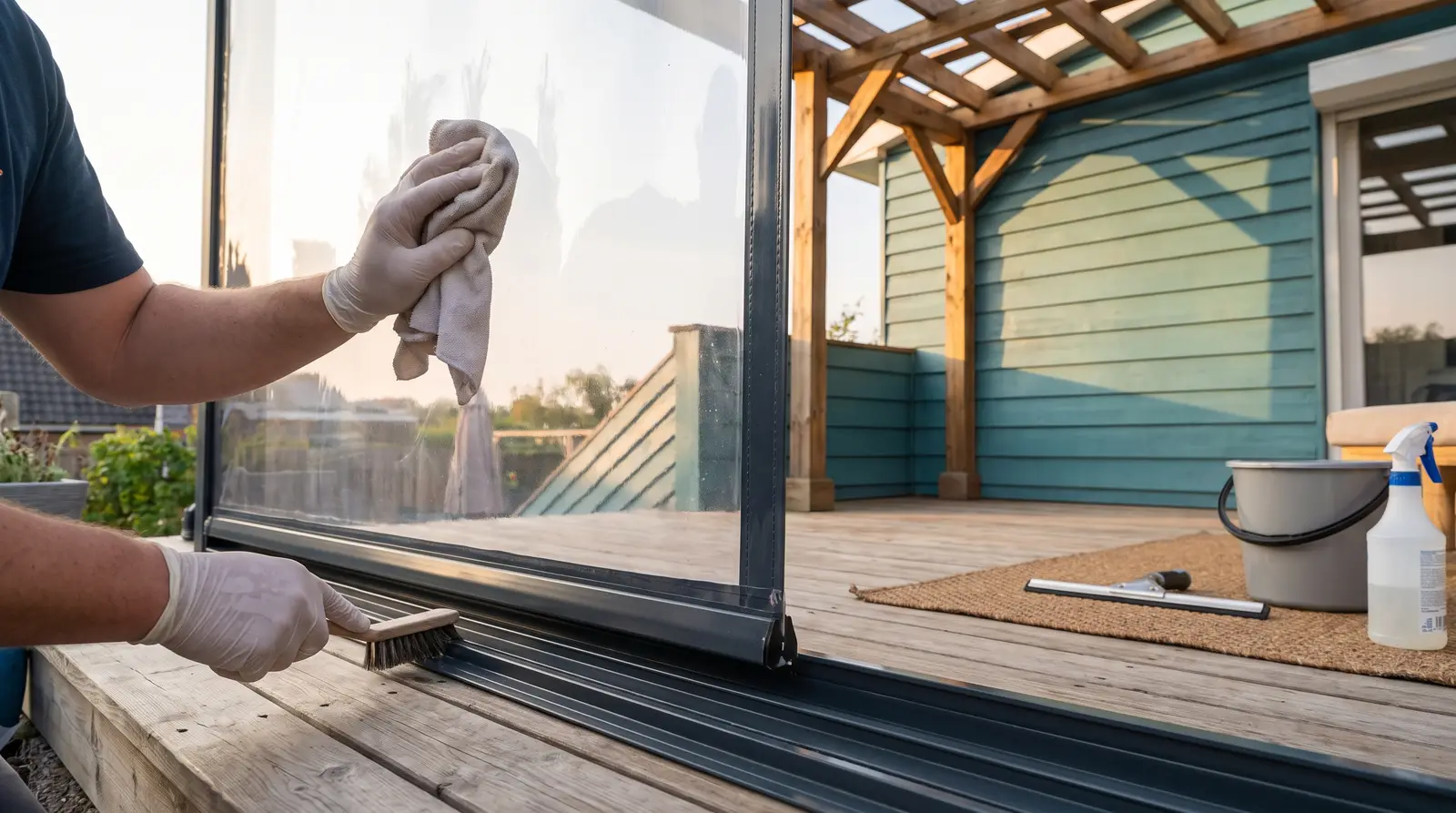
After storm damage to outdoor blinds, do 3 things in this order: make the area safe and stay away from anything unstable or near fallen powerlines, document the damage thoroughly before touching it, then get it assessed by a repairer. Do not attempt any repair while wind is still up or while the supporting structure is damaged, and do not clear debris around a fallen line under any circumstances.
Key takeaways
- Safety before property. Fallen powerlines, unstable pergolas and loose bottom bars in wind are all genuine hazards.
- Photograph and video everything before you move a single component, from wide shots to close-ups.
- Insurance outcomes vary considerably between policies and insurers. Check your own policy wording.
- Adelaide storm repairs typically run $120 to $600, with full replacement needed where the structure or the panel has failed.
Adelaide's damaging storms arrive with cold fronts through winter and spring, and outdoor blinds take the load because they are the largest flat surface on most alfrescos. A partly deployed blind in a 90 km/h gust behaves like a sail bolted to a verandah beam.
Step 1: safety, before anything else
Stay clear of fallen or damaged powerlines. Treat every fallen line as live. Keep everyone and every pet well away, and report it immediately to the electricity distributor's emergency line and to emergency services. Never move a blind, a branch or any debris that is touching or near a line.
Do not work in continuing wind. A loose bottom bar is a heavy aluminium extrusion swinging on a compromised fixing. Wait until the front has passed. The Bureau of Meteorology's South Australian warnings service tells you whether more is coming.
Do not go under or onto a damaged structure. If the pergola, verandah or beam the blinds are fixed to has moved, cracked or lost a post, the whole structure needs assessing before anyone stands under it. Blinds transfer real load into their fixings, and a damaged frame can fail progressively.
Do not climb. No ladders, no roofs, no standing on outdoor furniture. If damage is above ground reach, photograph it from the ground and leave it. The SA State Emergency Service is the agency for storm and flood assistance where there is an immediate risk to property or people, and their guidance is not to attempt height work yourself after a storm.
Isolate motorised blinds. Switch off at the isolating switch or unplug the transformer. Do not operate a damaged motorised blind and do not touch any wiring that has been exposed or wet. Electrical work must be carried out by a licensed electrician, without exception.
Step 2: document everything before you touch it
This is the step people rush and later regret. Do it before any tidying up.
- Wide shots of the whole alfresco or verandah showing the blinds in context and the surrounding damage.
- Medium shots of each affected opening.
- Close-ups of every specific failure: torn PVC, pulled brackets, bent bottom bar, split channel, sheared fixings, damaged hem.
- Video, walking the area and narrating what you are seeing. Video captures things stills miss and it is timestamped.
- The date and time the storm occurred, and note the conditions. Save or screenshot the Bureau of Meteorology warning and observations for that period as a record of what actually hit.
- Any debris that caused the damage, photographed in place where it is safe to do so (a branch through a panel, a trampoline against a channel).
- Your original paperwork: the installation invoice, the product documentation and any warranty card. Photograph them with everything else.
If you must move something immediately for safety, photograph it first from several angles, then move it.
Step 3: insurance, with the honest caveats
We are not an insurer, a broker or a loss assessor, and nothing here is advice about your policy. Outcomes vary substantially between insurers and between products, so the only reliable source is your own policy document and your own insurer.
What is generally worth knowing:
- Cover for outdoor blinds is not uniform. Some home policies treat fixed outdoor blinds as part of the building, some treat them as contents, and some exclude external shade structures or limit them specifically. Read the definitions section, not just the summary.
- Storm and wind exclusions exist. Some policies exclude damage where wind speeds did not exceed a stated threshold, or exclude gradual deterioration, rust, corrosion and wear. A blind whose fixings had already corroded through may be assessed as wear rather than storm damage.
- Maintenance history can matter. Keeping records of servicing supports the position that the failure was the storm rather than neglect, which is one practical reason to keep the outdoor blind maintenance checklist as a dated record.
- Notify early. Most insurers want prompt notification. Lodging a claim is not the same as committing to it, and you can withdraw if the damage turns out to sit under the excess.
- Compare the excess against the repair. Adelaide outdoor blind repairs run $120 to $600. If your excess is $750, a claim on a single damaged blind achieves nothing and a claims record has its own consequences at renewal.
- Do not authorise permanent repairs before your insurer has told you how they want the claim handled, unless the work is genuinely urgent for safety. Emergency make-safe work is usually treated differently to full repair.
If you have a dispute with an insurer or a trader, South Australia's Consumer and Business Services publishes information on consumer rights and complaint pathways, and the ACCC covers the consumer guarantees that apply to the repair work itself.
Step 4: getting it assessed
Once the weather has passed and the area is safe, get eyes on it.
What a repairer is checking:
- The fixings and the structure. Whether brackets have pulled, whether the beam or post has moved, and whether the mounting substrate is still sound. This determines whether it is a blind job or a builder job first.
- The panel. A single tear patches or the panel replaces at $350 to $600. A panel that has whipped itself to pieces along the hem is done.
- The channels and bottom bar. Bent extrusions rarely straighten acceptably and usually replace.
- The tube, spring and motor. A blind that was torn out while deployed often has tube or spring damage that is not visible from the ground.
| Storm repair | Adelaide band |
|---|---|
| Re-fix brackets and re-hang | $150 to $350 |
| Channel or bottom bar replacement | $200 to $450 |
| PVC panel replacement | $350 to $600 |
| Motor or tube service after damage | $300 to $600 |
| Full blind replacement (track-guided) | $900 to $2,000 |
Where damage crosses several of those at once, replacement is usually the correct call, and the framework for that decision is in repair or replace outdoor blinds.
Reducing the damage next time
The single highest-value habit is retracting the blinds fully before a front arrives and leaving them retracted. A retracted blind presents almost no sail area. A partly deployed one presents the most, because the panel can billow and shock-load the fixings.
Beyond that: get exposed openings onto track-guided systems rather than strapped ones, specify marine-grade 316 stainless fixings anywhere near the coast, and treat the twice-yearly fixing inspection as non-negotiable, because storms find corroded brackets first. The long-run version is in extending the life of your outdoor blinds.
For a storm-damaged blind, our outdoor blind repairs page explains how we pass your enquiry to a local Adelaide repairer. Request a free repair quote and get a written assessment you can put in front of your insurer.